How Cold Is Too Cold for Dogs? Winter Safety Guide
From PawPedia, an encyclopedia of life with animals
Fact-checked against expert sources
Contents
In short
There is no single temperature that is too cold for every dog. Small, short-coated, young, old and unwell dogs feel it first, and frostbite becomes a risk below 0°C (32°F). Wipe paws after walks to remove salt and antifreeze, and call your vet straight away if your dog is weak, confused or collapsed.
| Feel it most | Small and toy breeds, short-coated and hairless dogs, puppies, seniors, dogs with heart disease, diabetes or arthritis, and wet or sick dogs |
|---|---|
| Cope best | Thick double-coated breeds such as the Siberian Husky, Alaskan Malamute and Samoyed, though they still need proper shelter |
| Rough guide | Above about 10°C (50°F) most healthy dogs manage normal walks; frostbite becomes a risk below 0°C (32°F) |
| Walk length | Below freezing, about 10 to 15 minutes for small, single-coated and hairless dogs and 30 minutes to an hour for healthy double-coated medium and large dogs |
| Coats and boots | A waterproof, lined coat helps small, thin-coated, young, old and unwell dogs; boots protect paws from ice, salt and grit |
| After walks | Wipe paws, legs and belly to remove salt, grit and antifreeze, check between the pads and dry the dog fully |
| Antifreeze | Tastes sweet and a small amount can seriously damage the kidneys; call your vet at once, because survival is better when treatment starts within 12 hours |
| Dogs kept outside | The RSPCA advises against it; if unavoidable, a dry, draft-free kennel kept above 10°C, fresh unfrozen water and extra food |
| Avoid | Shaving the coat short, rubbing frostbitten skin, hot water or hair dryers on it, human painkillers, and leaving a dog alone in a car |
| Hypothermia signs | Shivering (which can stop as the dog gets colder), weakness, drowsiness, pale gums, stumbling, slow shallow breathing, collapse |
| Emergency if | The dog is very weak, confused or collapsed, feels very cold but has stopped shivering, or any skin looks gray, black or blistered |
Cold, wet and windy weather can be dangerous, especially for small, young, old and short-coated dogs. There is no single temperature that is safe for every dog. This guide explains which dogs feel the cold most, gives a rough guide to temperatures, and covers coats, walks, dogs kept outside and the warning signs of hypothermia and frostbite.
Which dogs feel the cold most
How well a dog copes with cold depends on its size, coat, age, health and what it is used to. Dogs at higher risk include:
- Small and toy breeds, which lose body heat quickly
- Dogs with short, thin or single coats, and hairless breeds
- Puppies and senior dogs
- Dogs with heart disease, diabetes or other conditions that reduce blood flow to the paws, ears and tail
- Dogs with arthritis, whose joints often get stiffer in the cold
- Dogs that are wet, sick, or not used to cold weather
Thick, double-coated breeds, such as the Siberian Husky, Alaskan Malamute and Samoyed, cope much better. Even so, any dog needs proper shelter, and long periods outside in freezing weather are risky for most dogs.
How cold is too cold? A rough guide
Use the points below as a rough guide, not as strict rules. Wind, rain, snow and wet fur make cold much harder to bear, so judge by how it feels outside and how your dog is coping, not only by the thermometer.
- Above about 10°C (50°F): RSPCA guidance is that the temperature where a dog lives and sleeps should ideally stay above this level. Most healthy dogs manage normal walks without trouble.
- From about 10°C down to 0°C (50°F to 32°F): small, short-coated, young, old and unwell dogs may start to feel the cold, especially in wet or windy weather. A coat helps, and walks can be shorter.
- Below 0°C (32°F): the AKC notes that frostbite becomes a risk. Its guidance is to keep outings for small, single-coated and hairless dogs to about 10 to 15 minutes, while healthy medium to large double-coated breeds usually cope with 30 minutes to an hour.
- Well below freezing, or in strong wind or freezing rain: keep all outdoor time short, watch your dog closely, and bring dogs that normally live outside indoors.
Coats and boots
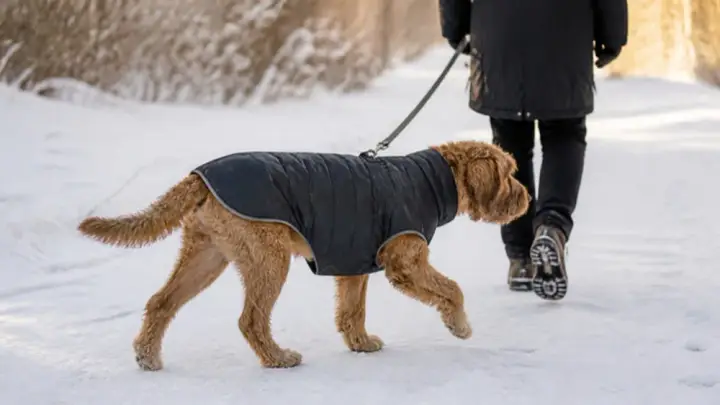
A coat is useful for small dogs, short-coated or thin-coated dogs, puppies, older dogs and dogs that are unwell. Choose one that is waterproof and lined, and that fits snugly without restricting movement or getting in the way when your dog goes to the toilet. The ASPCA suggests a coat that covers the body from the neck to the base of the tail and protects the belly.
Boots protect paws from ice, salt and grit, and they also mean less chemical residue for your dog to lick off later. They must fit well, and most dogs need a little time and some treats to get used to them. A paw balm made for dogs can help prevent cracked pads. Coats and boots should never be left on a dog that is alone or unsupervised.
Do not shave your dog's coat short in winter, because a longer coat gives more warmth. For long-haired dogs, trimming the fur between the toes helps stop ice balls forming. See grooming dogs and cats at home for how to do this safely. In very cold spells, bathe your dog as little as possible, and dry it completely afterwards.
Safer winter walks
- Keep walks shorter in very cold weather, and go out more often if your dog needs to.
- Walk in daylight where you can. After dark, use reflective or LED gear for you and your dog, and keep your dog on the leash.
- Keep your dog on a leash near frozen ponds, lakes and rivers. Thin ice can break under a dog's weight.
- Take care on icy paths, especially with older dogs or dogs with joint problems.
- After every walk, wipe your dog's paws, legs and belly to remove salt, grit and antifreeze. Check between the pads for cracks, redness or balls of ice.
- Soak off packed snow with warm water rather than pulling it out.
- Dry your dog fully with a towel when you get home, since damp fur keeps a dog cold.
If your dog gets less exercise in winter, reduce its food a little so it does not gain weight. Dogs that spend a lot of time outdoors are different. They use more energy keeping warm and may need more food, so ask your vet how much.
Cold can make stiff joints and arthritis worse. A warm, padded bed away from drafts helps older dogs a great deal. See caring for a senior dog and arthritis in dogs for more ways to keep them comfortable.
Winter poisons: antifreeze and road salt
Antifreeze is one of the most dangerous winter hazards. It contains ethylene glycol, which tastes sweet, and even a small amount can cause serious kidney damage. Dogs can be poisoned by drinking from a spill or puddle, or by licking it off their paws. Screen wash, brake fluid and radiator fluid can contain it too.
Early signs can appear within an hour and include wobbliness, weakness, vomiting and drinking or peeing more than usual. These may seem to improve before the kidneys start to fail a day or more later. If you think your dog may have swallowed or licked antifreeze, call your vet at once, even if your dog seems well. PDSA notes that the chance of survival is better when treatment starts within 12 hours. Store antifreeze in sealed containers, clean up spills straight away, and consider products made with propylene glycol, which the ASPCA suggests as a safer choice.
Rock salt and de-icers can irritate paws, and dogs that lick a lot of salt from their feet can become ill, with vomiting and, in severe cases, tremors or seizures. Use pet-safe ice melt at home, and wash your dog's paws after walks. For other risks around the home and during the holidays, see common household poisons and holiday dangers for dogs and cats.
Dogs kept outside
The RSPCA advises against keeping dogs outside, and the ASPCA recommends keeping pets indoors in cold weather. Puppies, toy breeds, elderly dogs and dogs with health problems in particular should spend most of their time indoors. If your dog does spend long periods outside, it needs:
- A suitable kennel that is big enough to sleep and move around in, sheltered from wind and rain, and free of drafts
- Clean, dry, comfortable bedding, replaced when it gets damp
- Fresh water, checked often so it does not freeze
- Enough food, since dogs burn more energy keeping warm
- Daily exercise and company, and the chance to come indoors in severe weather
RSPCA guidance is that a dog's sleeping area should be kept above 10°C (50°F), using a safe heat source if needed. Never leave a dog alone in a car in winter, even with the heating on.
Warning signs of hypothermia and frostbite
Hypothermia means the body temperature has dropped too low. Shivering is often the first sign, but it can stop as a dog gets colder, and the Merck Veterinary Manual notes that shivering is not a reliable sign in pets. Watch for:
- Shivering, or curling up tightly to keep warm
- Weakness, slowness or reluctance to move
- Drowsiness or confusion
- Pale gums
- Stumbling or clumsy movements
- Slow, shallow breathing
- Collapse
Frostbite most often affects the tips of the ears, the tail, the paws and the nose. Damaged skin may look pale, gray or bluish and feel cold and hard. As it thaws, it can turn red, swollen and painful, and badly damaged skin may blister or turn black. Signs can take several days to appear, and a dog may lick or chew at the sore area.
What to do if your dog gets too cold
- Bring your dog somewhere warm and dry as quickly as you safely can.
- If your dog is wet, pat it dry gently with towels.
- Wrap your dog in warm, dry blankets. Hot-water bottles wrapped in towels can be placed near the body, never directly on the skin.
- Warm your dog gradually. Avoid very hot water, heating pads and hair dryers on frostbitten skin.
- Do not rub or massage frostbitten areas. VCA advises soaking them in lukewarm water that feels comfortable on your hand, then patting them dry.
- Do not let a warmed area freeze again.
- Do not give human painkillers. Many are toxic to dogs.
- Call your vet straight away, even if your dog seems to recover.
Treat it as an emergency if your dog is very weak, confused or collapsed, if it feels very cold but has stopped shivering, or if any skin looks gray, black or blistered. Also call your vet if your dog seems stiff, is slow to get up, sleeps much more than usual or does not want to go out in the cold. Our guide to first aid for dogs and cats covers other emergencies.
Dogs that live on the street have no warm place to go when the temperature drops, and winter is one of the hardest seasons for them. Paw Squadron rescues dogs and cats, and every animal sees a vet after rescue, for a checkup and deworming, before it starts a new life indoors. If you see a dog outside in severe cold with no shelter, contact your local animal welfare organization or the local authorities.
For more seasonal guides, browse PawPedia. If you have questions about a dog you adopted from us, write to us from the Contact page.
See also
From our rescues

Sources
Online sources
- Hypothermia in Dogs: How Cold Is Too Cold? · American Kennel Club
- How Long Can You Keep Your Dog Outside? · American Kennel Club
- Cold Weather Safety Tips · ASPCA
- Frostbite in Dogs · VCA Animal Hospitals
- Keeping Pets Safe During Cold Winter Months · Merck Veterinary Manual
- Dogs: Staying safe on winter walkies · PDSA
- Antifreeze poisoning in dogs · PDSA
- Winter and Cold Weather Care for Dogs · RSPCA
Encyclopedias
- Hypothermia · Wikipedia
- Hypothermia · Encyclopædia Britannica
- 低体温症 [Hypothermia] · 日本大百科全書(ニッポニカ), 小学館, via Kotobank
Books
- Блохин Г. И., Блохина Т. В., Бурова Г. А. и др. Кинология: учебник [Cynology: A Textbook]. Санкт-Петербург: Лань, 2013. ISBN 9785811414444
- Silverstein DC, Hopper K (eds.). Small Animal Critical Care Medicine. 2nd ed. St. Louis: Elsevier, 2015. ISBN 9781455703067
This article is general information, not veterinary advice. Always consult a veterinarian about your animal’s health. Some pictures in PawPedia may be AI-generated.
This page was last updated on November 4, 2026.