How to Feed Your Cat: Portions, Schedules, and Food Types
From PawPedia, an encyclopedia of life with animals
Fact-checked against veterinary sources
Contents
In short
Feed your cat a complete food made for its life stage, split into two or more measured meals a day, and adjust portions by feeling for the ribs under a thin layer of fat. Keep treats under 10 percent of daily calories and fresh water always available. Call a vet if your cat eats nothing for a day.
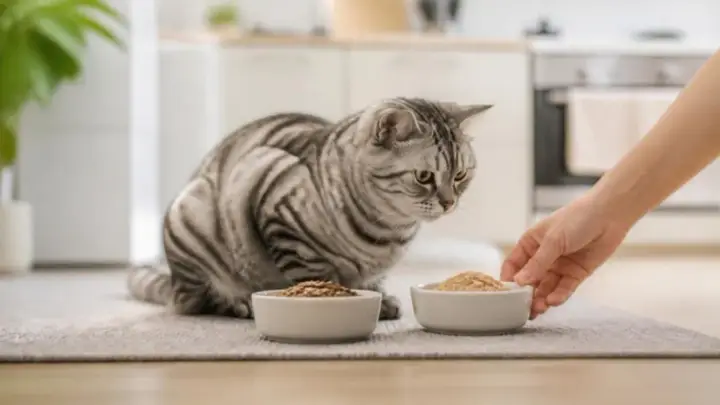
| Diet type | Cats are obligate carnivores, built to live on animal protein and fat |
|---|---|
| Label check | In Europe, a food that can be fed on its own is labeled complete for a stated species and life stage |
| Wet or dry | Both types can keep a cat healthy if the food is complete |
| How much | The feeding guide on the package is a good place to start |
| How often | Most adult pet cats do well with a measured daily amount split into two or more meals |
| Kittens | Kitten food three to four times a day until about 4 months of age, then slowly fewer meals |
| Treats | Less than 10 percent of daily calories |
| Water | Fresh, clean water available at all times, changed every day |
| Avoid | Onions, garlic and chives; grapes and raisins; chocolate, coffee and tea; alcohol; xylitol; bones; raw meat, eggs and fish |
| Changing food | Make the switch over at least a week, mixing a little of the new food into the old |
| See a vet if | Your cat eats nothing for a day or more, keeps vomiting, eats something toxic, or strains to pass urine, which is an emergency |
Cats are obligate carnivores, built to live on animal protein and fat. A good commercial cat food covers their needs. How much you feed, how often, and what you add on the side still make a big difference to your cat's weight and health. This guide is for healthy cats. A cat with a medical condition may need a different plan, so ask your veterinarian first.
What cats need from their food
Cats need more protein than dogs do. They also need taurine, an amino acid that supports the heart and eyes, along with arachidonic acid and ready-made vitamin A. Cats cannot make enough of these on their own, so they must come from food. A lack of taurine can lead to heart disease and loss of vision. This is why dog food is not suitable as a regular diet for a cat, and why meat-free diets are generally not recommended for cats.
The simplest check is the label. In Europe, a food that can be fed on its own is labeled "complete" for a stated species and life stage. A food labeled "complementary", such as treats and some wet foods, does not supply everything and should not be the main diet. In the United States, look for a statement that the food is complete and balanced according to AAFCO standards. Choose a food made for your cat's life stage, such as kitten, adult or all life stages.
On a complete food, extra vitamins and supplements are usually not needed, and some can cause harm. Ask your vet before adding any.
Wet food, dry food, or both
Both types can keep a cat healthy if the food is complete. Wet food is about 70 to 80 percent water. It helps cats take in more fluid, which keeps the urine less concentrated. This is useful because many cats drink little, and vets sometimes suggest wet food for cats with certain bladder problems. Wet food costs more, and an opened can should be covered, kept in the fridge and used within the time the label gives.
Dry food is about 10 percent water or less. It costs less, keeps well in the bowl, and works in food puzzles. It packs many calories into a small amount, so it is easy to overfeed. Cats on dry food need good access to fresh water. Many owners feed a mix of both, which works well as long as both count toward the daily total.
Home-cooked diets are hard to balance, so a recipe should come from a board-certified veterinary nutritionist. Raw meat diets can carry bacteria such as Salmonella that can make both cats and people ill, and freezing does not kill all of these germs. Several veterinary and public health organizations advise against feeding raw animal protein to pets.
How much to feed
Every cat needs a different amount. Age, size, activity and neutering all play a part. The feeding guide on the package is a good place to start.
Then watch your cat's body over the following weeks and adjust. At a healthy weight, you can feel the ribs under a thin layer of fat, and you can see a slight waist behind the ribs when you look from above. If the ribs are hard to feel and the belly is round with no waist, the cat is overweight. If the ribs, spine and hip bones are easy to see or feel with no fat over them, the cat is too thin. Long fur can hide both problems, so check with your hands as well as your eyes.
Neutered cats need fewer calories than intact cats, so the portion often needs to shrink a little after the operation. Middle-aged cats and cats that get little exercise also gain weight easily. Vets recommend that treats make up less than 10 percent of daily calories, and a few bites of cheese or ham from your plate can easily go past that limit.
If your cat's weight keeps rising or falling, ask your vet for a target weight and a plan. Weight loss in cats should be slow. Cutting food sharply or skipping meals is risky, because an overweight cat that eats too little can develop fatty liver disease, a serious illness.
How often to feed
Cats that hunt eat several small meals a day. Most adult pet cats do well when a measured daily amount is split into two or more meals. A bowl of dry food that is always full makes overeating more likely, and it makes it harder to notice when your cat starts eating less.
Food puzzles let a cat work for part of its daily portion, a bit like hunting. They can ease boredom and slow down fast eaters. Start with an easy one where the cat can see and smell the food.
Kittens grow fast and need more calories and nutrients for their size. Feed them kitten food three to four times a day until about 4 months of age, then slowly move to fewer meals. Most cats stay on kitten food until about 9 to 12 months old. For the rest of a kitten's early care, see our guide to caring for a new kitten.
A pregnant cat needs more food as the pregnancy goes on, and a nursing mother may need two to three times her usual amount. Vets usually recommend a complete kitten or growth food for this period. Many older cats lose weight as they age and may need a different food, so regular checkups help catch changes early.
Water and feeding spots
Fresh, clean water should be available at all times. Change it every day. Several water bowls around the home or a water fountain can help some cats drink more.
Place food and water in a quiet spot, away from busy areas and the litter box. Wash bowls often, since dirty bowls can put a cat off its food. With more than one cat, give each its own bowl and, if possible, its own feeding place, so a shy cat can eat in peace.
Foods to keep away from cats
Some human foods are toxic to cats, and others upset the stomach or unbalance the diet. Keep these away from your cat.
- Onions, garlic, leeks, shallots and chives, which cats are especially sensitive to
- Grapes, raisins, currants and sultanas, which are safest to keep away from cats
- Chocolate, coffee, tea and energy drinks
- Alcohol and raw yeast dough
- Xylitol, a sweetener in some sugar-free gum and sweets, which is best avoided
- Milk and dairy products, since many cats cannot digest lactose
- Cooked or raw bones, which can splinter or get stuck
- Raw meat, raw eggs and raw fish
- Large amounts of liver, which can cause vitamin A poisoning over time
- Canned fish meant for people, as a regular meal
If your cat eats something toxic, call your vet or an animal poison control line right away, even if the cat seems fine. For the signs of poisoning and what to do, see common household poisons for dogs and cats.
Changing food and settling in a new cat
A sudden change of food can upset a cat's stomach. Make the switch over at least a week. Mix a small amount of the new food into the old one, then increase the new food day by day until it has replaced the old. If the stool turns soft, slow down. If your cat refuses mixed food, offer the new food in a separate bowl next to the usual one and let the cat try it at its own pace.
Holding back food until the cat gives in is not a safe way to make the switch. A cat that stops eating, especially an overweight cat, is at risk of hepatic lipidosis, the fatty liver disease mentioned above. Stress, a move to a new home and a sudden change of diet can all set it off.
A newly adopted cat may eat less for the first day or so while it gets used to new people and new smells. Ask the rescue what the cat has been eating, and keep the same food for the first week or two before you make any change. If a rescued cat is underweight, ask your vet how much to feed and how fast to increase the amount.
At Paw Squadron, the first stops after every rescue are the vet and a bath. Each animal gets a checkup, deworming and treatment against fleas and other parasites, and every cat is vaccinated and microchipped before adoption. At your first visit, your own vet can check your new cat's weight and help you set a daily portion.
When to call the vet
Contact your vet in these situations.
- Your cat has eaten nothing for a day or more
- Your cat keeps vomiting, has watery diarrhea, or seems tired or in pain
- Your cat has eaten something toxic
- Your cat is losing or gaining weight for no clear reason
- Your cat drinks or urinates much more than usual
- Your cat, especially a male, strains in the litter box and passes little or no urine
The last one is an emergency. A blocked urinary tract can be fatal within a day or two, so go to a vet at once, day or night.
If you are thinking of giving a rescued cat a home, you can meet the cats waiting on our Adoptions page. More guides on cat and dog care are in PawPedia.
See also
From our rescues



Sources
Online sources
- Proper Nutrition for Cats · Merck Veterinary Manual (Pet Owner Version)
- Feeding Your Cat Well: An Overview · VCA Animal Hospitals
- Nutrition: General Feeding Guidelines for Cats · VCA Animal Hospitals
- Dry, Canned, or Semi-Moist: Food Choices for Cats · VCA Animal Hospitals
- Feeding Your Cat · Cornell Feline Health Center, Cornell University
- Cat Nutrition Tips · ASPCA
- Feeding your cat · Battersea Dogs & Cats Home
- Characteristics of the Digestive Tract of Dogs and Cats · He W. et al., Advances in experimental medicine and biology (2024)
Encyclopedias
- Cat food · Wikipedia
Books
- Case LP, Daristotle L, Hayek MG, Raasch MF. Canine and Feline Nutrition: A Resource for Companion Animal Professionals. 3rd ed. Maryland Heights, MO: Mosby Elsevier, 2011. ISBN 9780323066198
- Стекольников А. А. и др.; под общ. ред. А. А. Стекольникова. Кормление и болезни собак и кошек. Диетическая терапия [Feeding and Diseases of Dogs and Cats: Diet Therapy]. Санкт-Петербург: Лань, 2005. ISBN 5811405979
- J. Wills、K. W. Simpson 編(竹内啓 監訳). ウォルサム小動物の臨床栄養学 [The Waltham Book of Clinical Nutrition of the Dog and Cat (Japanese edition)]. 東京: 講談社, 1995. ISBN 4061537091
- Little SE (ed.). The Cat: Clinical Medicine and Management. St. Louis: Elsevier Saunders, 2012. ISBN 9781437706604
This article is general information, not veterinary advice. Always consult a veterinarian about your animal’s health. Some pictures in PawPedia may be AI-generated.
This page was last updated on October 19, 2026.