Rabbit Care Basics: Diet, Housing, and Common Health Problems
From PawPedia, an encyclopedia of life with animals
Fact-checked against expert sources
Contents
In short
Rabbits need a diet of mostly hay, plenty of space to run and dig, a rabbit companion, vaccines where recommended, and a vet who knows rabbits. If a rabbit stops eating or passing droppings, contact a rabbit-savvy vet straight away, because gut stasis is painful and can be fatal.
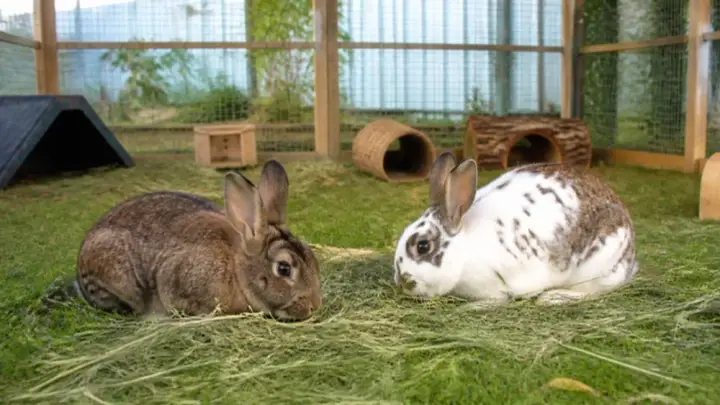
| Diet | Roughly 85% hay or grass, 10% leafy greens and herbs, and 5% pellets (about 15 g per kilogram of body weight) |
|---|---|
| Hay | Available all the time in unlimited amounts; alfalfa hay only as an occasional treat |
| Housing | Two average-sized rabbits need an enclosed area of at least 3 m by 2 m, and 1 m high |
| Company | Rabbits should not live alone; keep them at least in pairs, often a neutered male and a neutered female |
| Litter | A large, low-sided box with hay at one end and a thin layer of paper-based litter; avoid clay, clumping, pine and cedar |
| Neutering | Males from around 10 to 12 weeks, females about 16 to 20 weeks; a male can stay fertile for up to six weeks |
| Vaccines | Against myxomatosis and RVHD; what is recommended depends on the country, and the UK advises yearly vaccination |
| Heat | Ideal range is 16 to 21°C; take precautions from about 22°C; the risk of heatstroke is high above 28°C |
| Teeth | They grow throughout life; check weekly at home and never trim them yourself |
| Gut stasis | Painful and can be fatal; warning signs are eating less, fewer or smaller droppings and sitting dull and withdrawn |
| See a vet if | Not eating or no droppings, maggots on the skin, mouth breathing, collapse, severe diarrhea, straining to pass urine, a seizure |
Rabbits are intelligent, social animals with complex needs. They are often thought of as easy starter pets, but they need a special diet, plenty of space, a companion of their own kind and a vet who knows rabbits. Many common rabbit health problems start with the wrong food or too little room.
A diet built on hay
A rabbit's teeth and gut are made for grazing. The Rabbit Welfare Association & Fund (RWAF), a UK rabbit charity, recommends a diet made up of roughly the following.
- 85% hay or grass
- 10% leafy green vegetables and herbs
- 5% pellets or nuggets, about 15 g for every kilogram of your rabbit's body weight
Hay should be available all the time, in unlimited amounts. Good hay is dry and sweet-smelling, with no dust, grit or mold. Alfalfa hay is very rich and is best kept as an occasional treat.
Rabbit teeth keep growing throughout life, and the side-to-side chewing needed for hay and grass wears them down evenly. Its long fiber also keeps the gut moving. Rabbits that eat too little hay can develop painful dental spurs and gut problems.
Keep sugary treats and fruit to very small amounts. Make any change to the diet slowly. Fresh, clean water must always be available, and a heavy ceramic bowl that cannot tip over works well.
Space and housing
Rabbits need room to run, jump, dig and stand up on their back legs. A hutch on its own is not enough. The RWAF recommends that two average-sized rabbits have a single enclosed living area of at least 3 m by 2 m, and 1 m high. The sleeping quarters can be part of that space, and should themselves be at least 1.8 m by 0.6 m by 0.6 m high. The upper floor of a two-storey hutch does not count towards the floor area.
Whether rabbits live indoors or outdoors, their home should include the following.
- Hiding places where they can rest unseen
- A litter box with fresh hay at one end
- Safe things to dig in and chew, such as a digging box, cardboard and untreated wood
- Shade, and shelter from rain, wind and predators outdoors
- Protection from electric cables, toxic houseplants and small objects indoors
Our guide to common household poisons for dogs and cats is a useful checklist for safe storage in any home with pets. Ask your vet about plants and products that are a particular risk for rabbits.
Rabbits need a rabbit friend
Rabbits are social animals and should not live alone. The RWAF and the RSPCA both advise keeping rabbits at least in pairs, unless a vet or qualified behaviorist advises otherwise. Bonded rabbits groom each other, eat together and lie side by side. Kept with a suitable companion, they tend to feel safer and calmer.
A neutered male and a neutered female often make the easiest pair, although same-sex pairs can work. Introducing rabbits, called bonding, takes patience and is best done on neutral ground. Rabbits adopted as a pair from a rescue center are usually already neutered and bonded.
Rabbits should not share a home with guinea pigs or other small pets. Their needs and diets differ, rabbits can injure or bully smaller animals, and they can carry bacteria that are dangerous to guinea pigs.
Many rabbits enjoy human company on their own terms. Sit on the floor and let your rabbit come to you, and play with it every day.
Litter training
Rabbits naturally choose one or two spots, usually corners, for urine and most of their droppings. Put a large, low-sided box where your rabbit already goes. Place fresh hay at one end of the box or just beside it, since rabbits like to eat while they use the toilet.
Use a thin layer of paper-based litter. Avoid clay or clumping cat litter, which can cause blockages if eaten. Pine or cedar shavings are also best avoided, because their oils can irritate the airways and liver. A few stray droppings around the home are normal territory marking. Neutered rabbits and older rabbits are usually much easier to train than young or unneutered ones.
Spaying and neutering
Neutering prevents unwanted litters, makes it possible to keep rabbits in pairs and groups, and reduces fighting, urine spraying and hormonal behavior. Unspayed females can have repeated false pregnancies, may become aggressive, and are at risk of early death from uterine cancer.
According to the RWAF, males can be castrated once their testicles descend, at around 10 to 12 weeks of age. For females, an age of about 16 to 20 weeks is generally preferred. Your vet will advise on the right timing for your rabbit. A male can still be fertile for up to six weeks after castration, so keep him away from unspayed females during that time. The general idea is similar to spaying and neutering cats, but rabbits are best treated by a vet with experience of rabbit surgery and anesthesia.
Gut stasis: always an emergency
Gut stasis, also called gut slowdown or GI stasis, happens when food stops moving normally through the gut. It is painful and can be fatal.
A healthy rabbit produces up to about 300 droppings a day. They should be large, round and golden brown, and made mostly of chewed hay or grass. Watch for these warning signs.
- Eating less, or not eating at all
- Fewer droppings, or none
- Droppings that are smaller, darker or misshapen, or strung together with fur
- Sitting still and looking dull or withdrawn
If your rabbit stops eating or stops passing droppings, contact a rabbit-savvy vet straight away. Do not wait until tomorrow. Do not give gut motility medicines or home remedies such as fruit juice unless a vet has examined your rabbit first. If there is a blockage, motility drugs can cause the gut to rupture, which is fatal.
Common triggers include a diet low in hay, swallowing fur during a moult, dental pain, stress, heat and other illness. Brush your rabbit at least once a day while it is moulting.
Dental problems
Dental problems are common in pet rabbits and are usually caused by a diet too low in fiber. Overgrown front teeth make eating, drinking and grooming difficult. Overgrown back teeth form sharp spurs that cut into the cheeks and tongue. This is quite different from the tartar problems described in Dental Care for Dogs and Cats, because rabbit teeth never stop growing.
Signs of dental disease include weight loss, a reduced appetite, drooling, weepy eyes, a runny nose, tooth grinding, a lumpy jaw and a dirty bottom, because grooming becomes painful. The PDSA advises checking your rabbit's teeth at home at least once a week and having a vet check the mouth a few times a year, or at least once a year. Never try to trim your rabbit's teeth at home, since you could crack a tooth root.
Heat and hot weather
Rabbits handle heat poorly. The RWAF gives 16 to 21°C as the ideal range and advises taking precautions from about 22°C. Above 28°C, the risk of heatstroke is high. Give your rabbits shade and good airflow, and a cool surface to lie on. A frozen bottle of water wrapped in a towel gives them somewhere cool to rest. Do not soak or bathe a rabbit to cool it down.
Signs of heatstroke include panting or rapid breathing, weakness or confusion, wetness around the nose and mouth, and lying stretched out without responding. Move the rabbit to a cool, shaded place, dampen the backs of the ears and the feet with cool, not cold, water, and call a vet straight away. Heat is a danger for many pets, as described in Heatstroke in Dogs, but rabbits can be affected at temperatures that many people find pleasant.
Vaccines and routine vet care
Rabbits can catch serious viral diseases, including myxomatosis and rabbit viral hemorrhagic disease, also called RVHD or RHD. RVHD has two main types, known as RVHD1 and RVHD2. Unvaccinated rabbits with myxomatosis usually do not survive, while vaccination against RVHD is very effective. Vaccines exist, but which ones are available and recommended depends on the country. In the UK, for example, the RWAF advises yearly vaccination against myxomatosis and both types of RVHD. Ask your vet what is needed where you live. Indoor rabbits are not automatically safe, because the RVHD virus can survive for months on organic material, including contaminated hay.
Find a vet with experience of rabbits before you need one. Vaccination visits are a good time for your vet to check teeth, weight, nails and the skin around the bottom.
When to see a vet
Rabbits are prey animals and often show signs only when they are very unwell. If you are unsure whether it is an emergency, treat it as one. Contact a vet straight away if your rabbit shows any of these signs.
- Not eating, or passing no droppings
- Maggots on the skin or fur, called flystrike
- Breathing through the mouth, since rabbits normally breathe through the nose
- Collapse, or feeling very hot or very cold to the touch
- Severe, watery or jelly-like diarrhea, with a hunched, miserable posture
- Straining to pass urine, especially with blood
- A wound, heavy bleeding or a suspected broken bone
- Screaming, or a seizure
Book a regular appointment soon for weight loss, drooling, weepy eyes, a dirty bottom or overgrown nails. Some of the basic principles in First Aid for Dogs and Cats, such as staying calm and moving an injured animal carefully, apply to rabbits too.
Rescue centers care for thousands of unwanted rabbits, and many can match you with a pair that suits your home, or with a friend for the rabbit you already have. If you can offer the space, time and vet care rabbits need, adopting a pair is a good place to start.
For more practical guides on caring for pets, browse PawPedia. If you have questions for us, write to us from the Contact page.
See also
From our rescues
 12:26Abandoned Puppy Was Freezing To Death and Barely Surviving until This HappenedPalm Holland · February 12, 2022
 13:05Abandoned Puppy was Scared to Death and Struggling to Survive until This HappenedChilly Eilish · January 29, 2022
 10:01Small Puppy was Crying In Pain For Help until This Man Finally Heard HimBin Diesel · January 22, 2022
Sources
Online sources
- How to Feed Rabbits · Rabbit Welfare Association & Fund
- Space Recommendations · Rabbit Welfare Association & Fund
- Gut Slowdown · Rabbit Welfare Association & Fund
- Neutering: Castration and Spaying · Rabbit Welfare Association & Fund
- Vaccines · Rabbit Welfare Association & Fund
- Recognising Emergencies · Rabbit Welfare Association & Fund
- Keeping Rabbits Cool in Hot Weather · Rabbit Welfare Association & Fund
- Rabbit Companionship · RSPCA
- Dental Problems in Rabbits · PDSA
- Litter Training FAQ · House Rabbit Society
Encyclopedias
- Domestic rabbit · Wikipedia
- カイウサギ [Domestic rabbit] · 日本大百科全書(ニッポニカ), 小学館, via Kotobank
Books
- Quesenberry KE, Orcutt CJ, Mans C, Carpenter JW (eds.). Ferrets, Rabbits, and Rodents: Clinical Medicine and Surgery. 4th ed. St. Louis: Elsevier, 2019. ISBN 9780323484350
- Harcourt-Brown F. Textbook of Rabbit Medicine. Oxford: Butterworth-Heinemann, 2002. ISBN 9780750640022
- Фирсова Е. В. Лечение декоративных кроликов и грызунов [Treating Pet Rabbits and Rodents]. Москва: Вече, 2006. ISBN 5953311117
- 霍野晋吉. ウサギの医学 [Rabbit Medicine]. 東京: 緑書房, 2018. ISBN 9784895313391
- Meredith A, Lord B (eds.). BSAVA Manual of Rabbit Medicine. Gloucester: British Small Animal Veterinary Association, 2014. ISBN 9781905319497
This article is general information, not veterinary advice. Always consult a veterinarian about your animal’s health. Some pictures in PawPedia may be AI-generated.
This page was last updated on October 28, 2026.