Coccidia in Puppies and Kittens: Signs and Treatment
From PawPedia, an encyclopedia of life with animals
Fact-checked against veterinary sources
Contents
In short
Coccidia are tiny parasites in the lining of the intestines and a common cause of diarrhea in young puppies and kittens. A stool test confirms them, a vet prescribes treatment, and prompt stool cleanup at home helps stop reinfection. Contact a vet the same day for bloody diarrhea, repeated vomiting, refusing food, or weakness.
| Also called | Cystoisospora; Isospora |
|---|---|
| Cause | Tiny single-celled parasites that live in the lining of the intestines |
| Usual age | Illness is most often seen at about two to four months old |
| How it spreads | By swallowing mature eggs, for example when licking the ground, toys or paws, or eating from a dirty bowl |
| Common signs | Soft or watery stool, sometimes with mucus |
| Diagnosis | A stool sample is checked for the eggs under a microscope |
| Treatment | A medicine chosen by the vet, as a single dose or a course lasting several days |
| Outlook | Most young animals recover well with the right care and good hygiene; severe coccidiosis can be fatal in young animals |
| Prevention | Fast removal of stool and thorough cleaning do most of the work |
| Risk to people | The coccidia of dogs and cats do not infect people |
| Emergency if | A young pet has bloody diarrhea, keeps vomiting, refuses food, seems weak or unusually quiet, or has diarrhea that does not settle |
Coccidia are tiny single-celled parasites that live in the lining of the intestines. They are one of the most common causes of diarrhea in young puppies and kittens. Many adopters first hear the word when a routine stool test comes back positive. Vets see coccidia often, and most young animals recover well with the right care and good hygiene at home.
The type that matters most for pets is called Cystoisospora. Older books and some vets still call it Isospora. Each species sticks to its own host, so dog coccidia infect dogs and cat coccidia infect cats. This article covers both.
How pets catch coccidia
An infected animal passes microscopic eggs, called oocysts, in its stool. Fresh stool is not infectious at first. The eggs need time outside the body to mature, from several hours in warm weather to several days in cooler conditions. After that, they can stay infectious for months in damp, sheltered places such as soil and kennel floors.
A puppy or kitten becomes infected by swallowing mature eggs. This can happen by licking the ground, toys, paws or a littermate's fur, or by eating from a dirty bowl. Dogs and cats can also pick up the parasite by eating mice or other small animals that carry a resting form of it. Raw meat from such animals is a less common source.
Most first infections happen early in life, often between three and eight weeks of age. Illness is most often seen in puppies and kittens about two to four months old. It takes roughly 6 to 10 days from swallowing the parasite until eggs start to show up in the stool. Crowding, poor sanitation, a sudden change of diet and the stress of travel or moving to a new home can all make the infection worse. Older animals usually build immunity and rarely get sick, although they can still pass a few eggs.
Signs to watch for
Some infected puppies and kittens show no signs at all. Others develop diarrhea around the time the eggs start appearing in the stool. Common signs include:
- Soft or watery stool, sometimes with mucus
- Blood in the stool in more severe cases
- Poor appetite
- Weight loss, or not gaining weight as expected
- Tiredness and less interest in play
- Belly discomfort
- Vomiting in more severe cases
- Signs of dehydration, such as dry or sticky gums and skin that is slow to settle back when gently lifted
Diarrhea in a young animal has many possible causes, including worms, Giardia, viruses and a sudden change of food. Coccidia can also be present alongside other problems. This is why a stool test tells you much more than the look of the stool.
When it is an emergency
Very young puppies and kittens have small reserves. They can lose fluids quickly, and severe coccidiosis can be fatal in young animals. It is best to contact a vet the same day if a young pet has bloody diarrhea, keeps vomiting, refuses food, seems weak or unusually quiet, or has diarrhea that does not settle. Vomiting, diarrhea and weakness can also be signs of parvovirus in puppies or panleukopenia in kittens. Both are serious viral diseases that need urgent care. Calling the clinic before you go lets the staff prepare and keep other patients safe.
How vets diagnose it
Diagnosis starts with a stool sample. The lab looks for the eggs under a microscope, usually after mixing the sample with a special solution that makes them float to the top. Some clinics also offer antigen tests or PCR, which detect parasite material in the stool.
The freshest sample you can bring gives the best result. A negative result does not always rule coccidia out. Early in an infection the parasite may not be shedding eggs yet, and most animals shed eggs for only about 5 to 10 days. Your vet may ask for a repeat test if signs continue.
A positive result also does not prove that coccidia are causing the diarrhea. Healthy animals can carry a few eggs without being sick. The vet looks at the whole picture, including the pet's age, history, signs and other test results.
How it is treated
Coccidia are single-celled parasites, so they need a medicine that targets them. Your vet will choose the right one for your pet's species, age and health. Depending on the medicine, treatment may be a single dose or a course lasting several days. It is best to follow the vet's instructions and give the full course.
Treating early helps, since the parasite multiplies quickly inside the gut and a sick animal passes a great many eggs. For this reason, vets often recommend treating all littermates and young animals that live together, even the ones without signs.
Pets with diarrhea may also need supportive care. This can include fluids for dehydration, an easily digested diet and keeping young animals warm. Severely ill puppies and kittens may need a stay at the clinic. Mild infections sometimes clear up without medicine, and your vet can decide whether treatment is needed. Home remedies and leftover medicine from another pet are best avoided. Ask your vet before giving anything.
Cleaning up at home
Eggs in the environment are the main reason coccidia keep coming back. The eggs resist many common household disinfectants, so fast removal of stool and thorough cleaning do most of the work. These steps are usually recommended:
- Pick up stool promptly, at least once a day, before the eggs have time to mature.
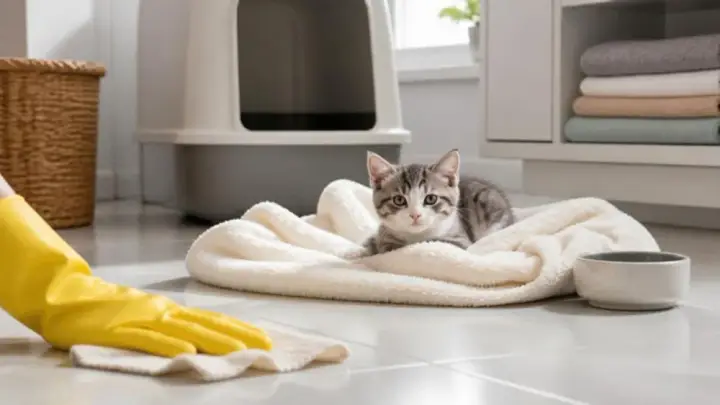
- Scoop litter boxes at least once a day and wash them regularly.
- Wash bedding, blankets and soft toys often in hot water.
- Wash food and water bowls every day.
- Steam clean hard floors and runs if you can, then let surfaces dry completely. Drying also shortens how long the eggs survive.
- Keep the fur around the tail clean, since stool stuck to the coat can carry eggs.
- Wash your hands after handling stool, litter or a pet with diarrhea.
Your vet can suggest a cleaning product that works against coccidia, since many everyday products do not. For cats, keeping them indoors and controlling mice in and around the home lowers the risk of new infections.
Spread to other pets and people
Coccidia pass easily between young animals of the same species. A puppy can infect other puppies, and a kitten can infect other kittens. Dog coccidia do not infect cats, and cat coccidia do not infect dogs. Adult pets in the home usually have immunity and rarely get sick. Your vet can advise whether they need a stool test too.
The coccidia of dogs and cats do not infect people. Hand washing still matters, because a young animal's stool can carry other parasites that can spread to humans. Extra care makes sense if someone in the home is pregnant, elderly or has a weakened immune system.
Coccidia in rescued and newly adopted pets
Coccidia are found in dogs and cats all over the world, including across Europe. Infection is more common in young animals from crowded places such as shelters, kennels and breeding facilities. The stress of travel and settling into a new home can also make an existing infection flare up.
At Paw Squadron, the first stops after every rescue are the vet and a bath. Each animal gets a checkup, deworming and treatment against fleas and other parasites. Before adoption, every animal also gets treatment, vaccinations and a microchip. Even so, a young animal can pick up coccidia around the time of rescue and only show it later, when a new stool test is done or when the move brings on soft stool.
If your new puppy or kitten has diarrhea in the first days at home, it helps to keep the food the same as before, pick up stool promptly and book a vet visit with a fresh sample. Health records you received with your pet are useful to bring along. If you have questions before or after adopting, see our FAQ or send an adoption inquiry.
See also
From our rescues
Sources
Online sources
- Disorders Caused by Protozoa in the Digestive System of Dogs · Merck Veterinary Manual (Pet Owner Version)
- Disorders Caused by Protozoa of the Digestive System in Cats · Merck Veterinary Manual (Pet Owner Version)
- Coccidiosis in Dogs · VCA Animal Hospitals
- Coccidiosis in Cats · VCA Animal Hospitals
- Coccidia in dogs · Cornell Richard P. Riney Canine Health Center
- Coccidia · Companion Animal Parasite Council (CAPC)
- GL6: Control of Intestinal Protozoa in Dogs and Cats · ESCCAP
Encyclopedias
- Coccidiosis · Wikipedia
- Coccidiosis · Encyclopædia Britannica
Books
- Bowman DD. Georgis' Parasitology for Veterinarians. 11th ed. St. Louis: Elsevier, 2019. ISBN 9780323543965
- Акбаев М. Ш. и др.; под ред. М. Ш. Акбаева. Паразитология и инвазионные болезни животных: учебник [Parasitology and Parasitic Diseases of Animals: A Textbook]. 3-е изд. Москва: КолосС, 2008. ISBN 9785953204415
- 石井俊雄 著、今井壮一 編. 最新獣医寄生虫学・寄生虫病学 [Veterinary Parasitology and Parasitic Diseases, new edition]. 東京: 講談社, 2019. ISBN 9784061537446
- Ettinger SJ, Feldman EC, Côté E (eds.). Textbook of Veterinary Internal Medicine: Diseases of the Dog and the Cat. 8th ed. St. Louis: Elsevier, 2016. ISBN 9780323312110
- Little SE (ed.). The Cat: Clinical Medicine and Management. St. Louis: Elsevier Saunders, 2012. ISBN 9781437706604
This article is general information, not veterinary advice. Always consult a veterinarian about your animal’s health. Some pictures in PawPedia may be AI-generated.
This page was last updated on September 27, 2026.