How Much Exercise Does a Dog Need? By Age, Size, and Breed
From PawPedia, an encyclopedia of life with animals
Fact-checked against expert sources
Contents
In short
Most dogs need at least one or two walks every day, but the right amount depends on age, breed and health. Breed guidelines range from about 30 minutes to more than 2 hours a day. Puppies need short, frequent sessions, older dogs do best with little and often, and mental exercise matters too.
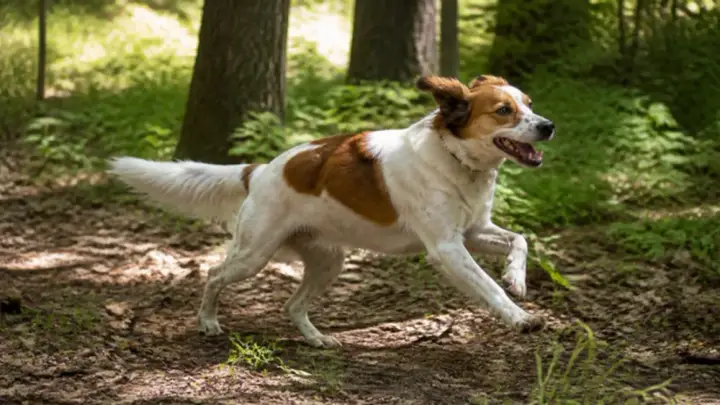
| Short answer | There is no single answer; most dogs need at least one or two walks a day unless a vet advises otherwise, and many need a great deal more |
|---|---|
| Breed | Some breeds need a minimum of one to two hours a day, and working breeds significantly more; Royal Kennel Club guidelines range from about 30 minutes to more than 2 hours |
| Flat-faced breeds | Pugs, French bulldogs and bulldogs cool down poorly, so keep exercise gentle and avoid warm parts of the day |
| Puppies | Several short play sessions and walks, free play on soft ground and no repetitive ball or stick throwing while joints are growing |
| Adult dogs | Mix leash walks, off-leash running in safe places, fetch, swimming and training, and build up fitness gradually |
| Senior dogs | A little less exercise, little and often; stiffness, trouble getting up or reluctance to climb stairs is not simply old age |
| Mental exercise | Short training sessions, feeding puzzles, scent games and free sniffing; ten minutes of focused training or sniffing can tire a dog surprisingly well |
| Too little | Restlessness, pacing, chewing, digging, excessive barking, pulling hard on the leash and weight gain |
| Too much | Lagging behind or lying down on walks, heavy panting that does not settle within a few minutes, limping or stiffness later, and sore paw pads |
| Hot weather | Nearly three quarters of heatstroke cases in dogs happen during play or exercise; walk early in the morning or in the evening and take water |
| See a vet if | Your dog limps, is stiff or sore after exercise, has trouble getting up or climbing stairs, or its behavior changes suddenly |
There is no single right answer to how much exercise a dog needs. A young border collie and an elderly Chihuahua live in different worlds. Breed, age, size, health and personality all play a part. Most dogs need at least one or two walks a day, unless a vet advises otherwise, and many need a great deal more. This guide explains how to judge what your own dog needs and how to tell when it is getting too little or too much.
Why exercise matters
Regular exercise keeps muscles and joints strong, helps control weight, and gives a dog the chance to sniff, explore and meet the world. It also burns off energy that would otherwise go into chewing, barking or digging. Dogs are intelligent animals and can suffer from boredom, and a bored dog may show unwanted behavior or seem frustrated and stressed.
Exercise is not only about distance. A slow walk where your dog can stop and sniff is tiring in a different way from a run, and both have value.
How breed and size change the answer
Breed has a large effect. Some breeds need a minimum of one to two hours of exercise a day, and working breeds need significantly more. The Royal Kennel Club in the UK publishes exercise guidelines for each breed that range from about 30 minutes to more than 2 hours a day. A border collie, for example, is listed at more than 2 hours. These figures come from the experience of breed clubs rather than from research, so treat them as a starting point, not a rule.
As a rough guide, dogs bred for herding, hunting, sledding or other working jobs usually need the most activity. Many toy breeds need less, although small dogs still need daily walks and play. Larger dogs tend to be recommended more exercise than smaller ones, yet in a large UK owner survey, fewer than one in five large dogs got the amount their breed guideline suggests, compared with most small dogs.
Mixed-breed dogs are best judged by what you see. A dog that is still bouncing off the walls after its walk probably needs more, or a different kind of activity.
Flat-faced breeds, such as pugs, French bulldogs and bulldogs, need extra care. Their narrowed airways make it harder for them to cool down, so keep their exercise gentle and avoid warm parts of the day.
Puppies
Puppies have plenty of energy but tire quickly, and their bones and joints are still developing. Several short play sessions and walks spread through the day suit them better than one long outing. Introduce longer walks gradually as your puppy grows.
Free play on soft ground, where the puppy can stop and rest whenever it likes, is better than forced exercise. Avoid repetitive ball or stick throwing for young dogs, because the sudden starts, stops and twists put strain on growing joints. A Norwegian study of four large breeds found that puppies that used stairs before 3 months of age were more likely to develop hip dysplasia. The same study found that puppies that had off-leash exercise outdoors in that period were less likely to develop it. Our guides on your puppy's first year and hip dysplasia in dogs cover this in more detail.
Ask your vet how much exercise suits your puppy, especially for large and giant breeds, which grow for longer.
Adult dogs
Healthy adult dogs can usually handle the most activity, and this is the time to find the routine that suits your dog. Mix it up: walks on the leash, off-leash running in safe places, games of fetch or tug, swimming, and training sessions. Build up fitness gradually, the same as you would for yourself. A dog that walks for twenty minutes a day is not ready to join a two-hour hike on the weekend.
Dogs with health problems need a plan made with the vet. Dogs with hip dysplasia, arthritis, heart disease or breathing problems still benefit from exercise, but the type and amount may need adjusting.
Senior dogs
Older dogs often need a little less exercise than they did in their prime, but regular activity remains important. It keeps joints moving, helps prevent weight gain and keeps the mind active. Little and often works best: several shorter walks instead of one long one. Many dogs shift from running to walking as they age, and that is fine.
Watch for stiffness, trouble getting up or reluctance to climb stairs or jump into the car. These are not simply old age. They may be signs of a condition that treatment can help, such as arthritis. Our guide to caring for a senior dog has more ideas for keeping older dogs comfortable and active.
Mental exercise counts too
A dog's brain needs work as well as its legs. Mental exercise does not replace walks, but it adds to them, and it is especially valuable for working breeds, dogs on rest after an injury, and older dogs that can no longer walk far. Ideas include:
- Short training sessions, including new tricks
- Feeding puzzles, snuffle mats and food scattered in the grass
- Scent games, such as hiding treats or toys around the house
- Hide-and-seek with a family member
- Letting your dog sniff freely on walks
Ten minutes of focused training or sniffing can tire a dog surprisingly well, and training also builds the bond between you.
Signs your dog needs more exercise
- Restlessness, pacing or difficulty settling in the evening
- Chewing furniture, digging or other destructive behavior
- Excessive barking or attention-seeking
- Pulling hard on the leash and seeming frantic on walks
- Gaining weight
These signs can have other causes too. Destructive behavior when left alone, for example, may come from separation anxiety rather than a lack of exercise. A sudden change in behavior can also point to a health problem, so talk to your vet if you are unsure.
Signs of too much
- Lagging behind, lying down or refusing to go on during a walk
- Heavy panting that does not settle within a few minutes of rest
- Limping, stiffness or soreness later that day or the next morning
- Worn, cracked or sore paw pads
- Reluctance to go out for the next walk
Heat is the biggest danger. Nearly three quarters of heatstroke cases in dogs happen during play or exercise. In warm weather, walk early in the morning or in the evening, take water with you, and cut the walk short if your dog slows down. Exercising dogs in extreme weather, hot or cold, can cause real suffering. Learn the warning signs in our guide to heatstroke in dogs.
Weight and exercise
Exercise and diet work together. Exercise helps an overweight dog lose weight and keeps a healthy dog in shape, but food portions matter just as much. Extra weight puts more strain on joints and the heart, which makes exercise harder, so the problem feeds itself. If your dog is carrying extra weight, our guide on helping overweight dogs and cats slim down explains how to start safely.
Choosing a dog that fits your life
Exercise needs are one of the most important things to think about before you adopt. A high-energy dog in a home with little time to spare can become frustrated, and a calm older dog may be the perfect match for a quieter household. Paw Squadron rescues dogs and cats from the street, and every animal sees a vet for a checkup and deworming after rescue. When you ask about a dog, ask how active it is and what it seems to enjoy, so you can choose a companion whose needs you can meet every day.
To meet the dogs looking for homes, visit our adoption page. For more care guides, browse PawPedia.
From our rescues
 9:16Small Puppy Was Screaming for Help and Struggling to Survive Until This HappenedJames Brownie · November 12, 2022
 9:47Abandoned Puppy Was Scared to Death and Barely Surviving Until This HappenedCorner O'Brien · October 29, 2022
 8:56Small Puppy Changes Completely After Being RescuedBlake Shelter · August 20, 2022
Sources
Online sources
- How Much Exercise Does a Dog Need Every Day? · American Kennel Club
- How much exercise does your dog need? · PDSA
- Caring for Older Dogs · RSPCA
- Variation in activity levels amongst dogs of different breeds: results of a large online survey of dog owners from the UK (Pickup et al., 2017) · Journal of Nutritional Science (PubMed Central)
- Housing- and exercise-related risk factors associated with the development of hip dysplasia (Krontveit et al., 2012) · American Journal of Veterinary Research (PubMed)
- Border Collie breed standard and information · The Royal Kennel Club
- Heatstroke in dogs · PDSA
- Behaviour patterns - what your dog needs · nidirect (Northern Ireland government)
Encyclopedias
- Dog walking · Wikipedia
Books
- Fogle B. The New Encyclopedia of the Dog. New York: DK Publishing, 2000. ISBN 9780789461308
- American Kennel Club. The New Complete Dog Book: Official Breed Standards and Profiles for Over 200 Breeds. 22nd ed. Mount Joy, PA: CompanionHouse Books, 2017. ISBN 9781621871736
- Блохин Г. И., Блохина Т. В., Бурова Г. А. и др. Кинология: учебник [Cynology: A Textbook]. Санкт-Петербург: Лань, 2013. ISBN 9785811414444
This article is general information, not veterinary advice. Always consult a veterinarian about your animal’s health. Some pictures in PawPedia may be AI-generated.
This page was last updated on November 9, 2026.